It's 2026, you’re fresh into the audio game, and are excited to build your first system. You’ve auditioned speakers, and you’ve narrowed it down to the perfect set for your listening space. Now comes the next step: figuring out how you’re going to power them so you can feel the impact of the bassline from your favorite song, or the dynamic vocal performance from your favorite singers. There is just one problem: What do all the classifications mean?

Even Dr. Evil gets confused sometimes
Lucky for you, dear reader, today we will be going through a quick lesson in demystifying Amplifiers and their classifications. From Class A, AB, D, and G. By the end of this, you’ll have a good understanding of what each is, the benefits, and the drawbacks to help make the best possible decision for yourself!
Class A: The beginning
We start in the year 1906, Lee De Forest, an American inventor, made the first ever Audion Tube. Building off of Morse code technology at the time. Lee’s Audion three-electron tube (Triode) could not only detect, but also amplify radio signals, allowing us to broadcast voice and music across airwaves. In 1916, the first radio advertisement was transmitted!
This paved the way for future generations to enjoy new comforts in their home, such as the broadcast of music or even famed radio shows like “The Shadow”, running from 1937 to 1954.

239 Episodes from 1937-1954 as a standalone show
Soon, Class A tube amplifiers were used globally to broadcast music, news, radio shows, and sports. The technology, while basic by today's standards in amplification topology and circuitry, Class A quickly gained a reputation as the absolute best for high-fidelity sound reproduction and still holds that title today. They have held the top spot in overall audio quality for the past 120 years. The reason behind this; Class A amps are designed to continuously conduct current to output devices (speakers) even when not on. The idea behind this was that, instead of constantly turning on and off, the system would always be warm, thus getting rid of any warm-up period. This linear operation, where the transistor never shuts off, along with their massive power supplies and transistors, helps avoid the crossover distortion that different amp classifications can run into, thus providing a more “pure” sound.
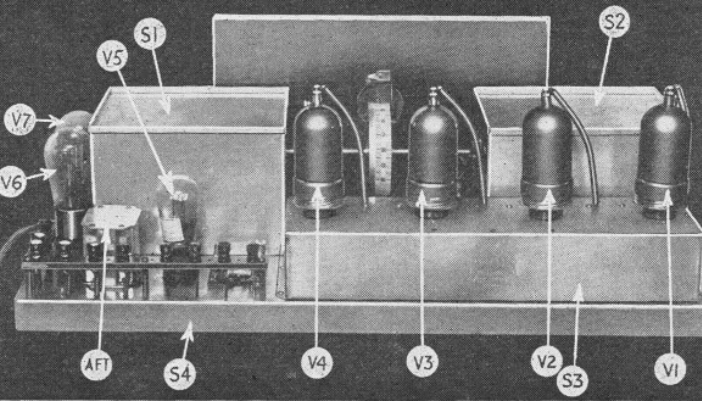
Class A Vacuum Tube Amplifier from the 1930’s
Though, to quote the great Uncle Ben, “With great power comes great...Electricity bills” or something like that. While Class A amps get the most out of your audio signals, making sure that you can the most out of your music, they are also the most inefficient, drawing anywhere between 2-5 times the amount of current that a Class AB amplifier would. Because of this power draw, Class A amps also tend to run in the neighborhood of 120-140 degrees on average.
However, if you’re looking to get the most out of your audio, then look no further than a Class A amp.
Class A/B: Evolution
While Class A dominated the space of audio/radio in the early days. We fast forward to the late 1940’s, where the demand became clear for higher efficiency amplifiers. The first try at creating this kind of technology was Class “B” amplification. However, what they quickly found was that while Class B was much more efficient, it was also heavy with distortion. So back to the drawing board they went, and thus, the Class A/B amplification topology was born. Using a push-pull circuitry, class A/B, as you might have guessed, is the marriage between A & B. Allowing for a more efficient power draw, lower heat & higher fidelity. While not quite as pure in sound as Class A, A/B was the perfect successor for its predecessor; it's also the most common type of amplifier you would find in homes and on store shelves today.
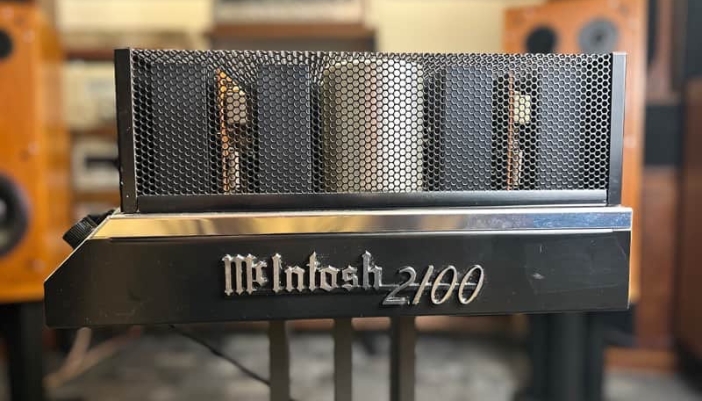
McIntosh MC2100, First solid-state McIntosh Amp, released 1969
Whether you’re looking at Audio Video Receivers (AVR), Integrated Amplifiers, or Power Amps. You have plenty of options to choose from, as these amps follow in the footsteps of their older sibling by using Massive power supplies and transformers to help pass through current to the highest fidelity they can. In fact, many quality Amplifiers use toroidal transformers, patented by Nikola Tesla back in 1891, to achieve this task as they are more efficient in terms of power draw, allowing for a cleaner sound than what Class B amplification on its own would do.
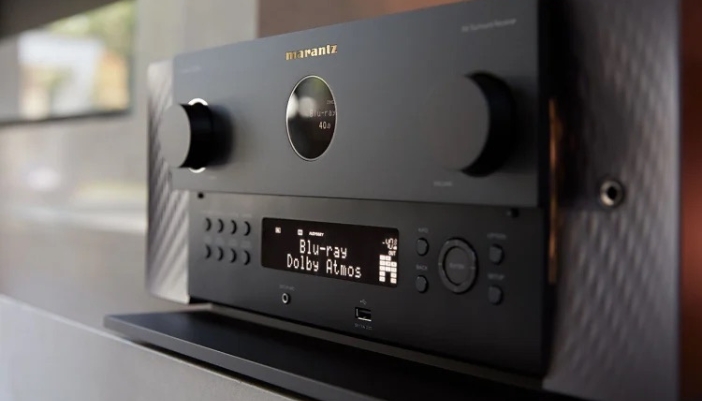
Marantz Cinema30 AVR
The two downsides to class A/B amplification are quite simple. They aren’t as pure in sound as Class A, and it's the most prevalent amplification topology on the market today, thus giving almost endless choices. However, one way that you can quickly separate the contenders from the pretenders in the amp world is by weight. A simple weight test will tell you a lot about what you might hear from certain models from different brands. If you want to get a good gauge on how one might perform, try lifting the front of it up with a few fingers. The heavier the amp, the heavier the power supply and transformer. The heavier those are, usually the purer the sound will be!
Class D: Living in a Digital World
Many might be surprised that Class D amplification has been in circulation for home use since the 1960’s, though on a limited basis. The technology didn’t actually pick up steam in the high-end home audio world until this century.
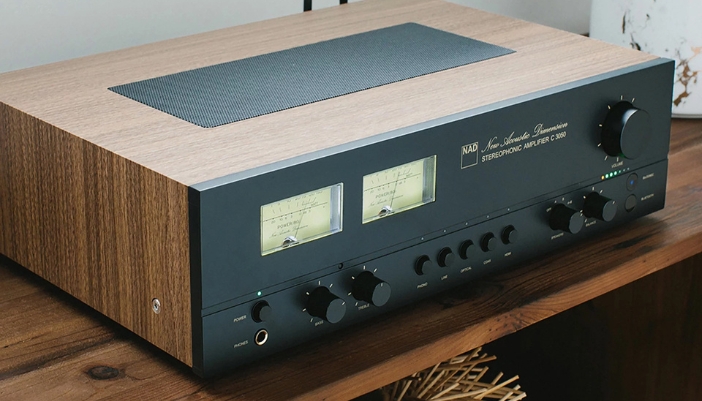
NAD C3050
Class D amplification’s claim to fame is its robust efficiency, allowing for a cooler listening experience (Like...literally it runs cooler). Running at near 90% efficency and light weight, these amps can withstand even the longest of marathon listening sessions. Generally more widely seen in car and marine applications, the Class D home amplifiers have been making some noise lately by providing another alternative to the Hi-Fi game. Using PWM Conversion (Pulse Width Modulation) to translate digital signals into analog, running through a low-pass filter to reconstruct the signal into Analog to prevent loss of energy in the signal. They function by switching output transistors fully on or off, minimizing heat generation and allowing for compact, lightweight designs suitable for car, boat, or home audio.
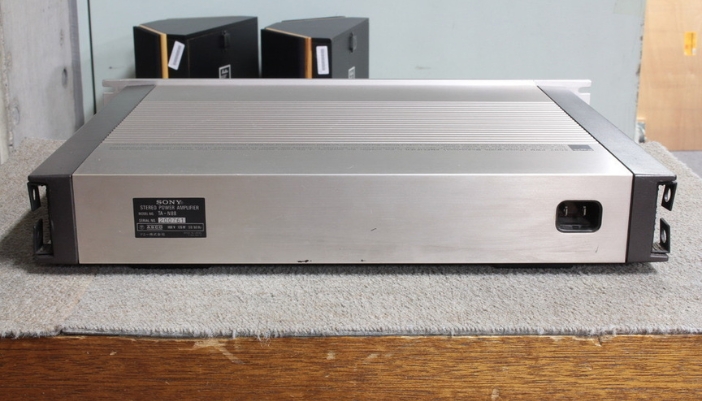
Sony TA-88, released in 1977.
While there have been some amazing strides in the Class D amplification world (Look no further than the NAD Master M33) there are some glaring weak points that many still face. For example, as explained in the section about Class A and A/B amplifiers, those have heavier transformers and power supplies, thus giving you a more robust and full sound with a larger sound stage. Class D swaps out those weighty beasts in favor of keeping the chassis cool at all costs. Unfortunately, what that means most of the time is that you’ll probably have to have your amp turned up quite a bit more on the volume knob comparatively, just to get a very similar sound experience. If you only listen at low levels, then this will not be much of a difference. This also means that you’ll want to be very shrewd when picking out this kind of amplifier for your speakers. Make sure you look at your speaker efficiency (dB’s), as you will want to run this amp with speakers that will open up with even the smallest amount of power.
Not all is lost, though! Class D is quickly showing that it has the chops to stand with some of the best Class A and A/B amplifiers on the market; it just might take a bit more time.
Class G: Class A/B’s next Evolution
You thought we were done with A, and A/B didn’t you? Much like those famous creatures from a certain Nintendo franchise, it just keeps evolving and getting better over time. Class G is a unique type of amplification that allows you to get the best of both worlds, while also closing that efficiency gap in Class D.
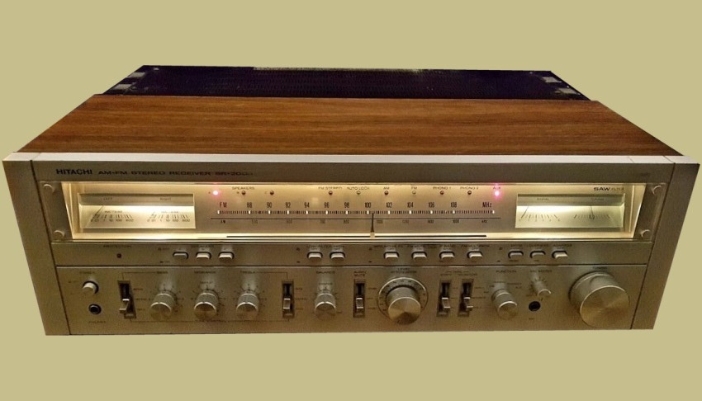
Hitachi SR-2004, released in 1978
Invented in the 1970’s by Hitachi, and seen in some of their earliest amplifiers, this type of amp asks us the question, “What if we could have our cake, AND eat it too?” The design uses multiple power supply rails, switching to higher voltages only when signal peaks require it. By operating at lower voltages for most audio, it significantly reduces power waste and heat compared to Class A/B, while maintaining high fidelity, often by running in pure Class A at low levels, some Class G amplifiers will pull in the neighborhood of 30 Watts of pure Class A power before railswitching over to A/B.
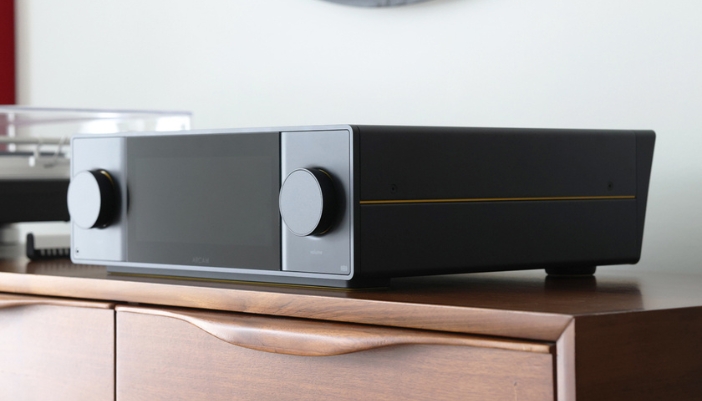
Arcam Radia SA45
Now, you might be wondering to yourself, “What are the downsides to an amplifier that not only can give you the fidelity of Class A, and similar efficiency to Class D? Well, their pricing floor tends to be quite a bit higher than Class A/B and D amplifiers. They can also be higher in overall distortion due to the rail switching between Class A and A/B. Their design, due to the nature of what its main objective is, is also quite a bit more complex, leading to not only higher costs, but also trickier fixes in case anything were to happen internally. Also, depending on the sound profile that you may like, Class G can sound a bit sterile (clean) to the ear, resulting in a more mechanical sound rather than a natural expression to some. If this is the type of amplifier you are after, I would make sure to test one out on different speakers and see if it's to your liking. With all that being said, buying from a reputable brand such as Arcam, you’ll get yourself a beautifully sounding system that will not compromise on quality, sound, or energy use!
Conclusion!
There is a sea of power for your speakers out there, and it's always important to make sure you know what you’re getting yourself into. This is just one small step to understanding the world of audio, but an important one in choosing your perfect system. Whether you’re looking to build a Home Theater or an amazing two-channel system meant for critical listening. There is an amp type for every purpose and every ear.
If you're still unsure, come visit us at Hifi Buys on Nolensville Road, and one of our in-house experts would be more than happy to take you through the different options and help pick out the perfect amplifier to complement your system!